APE Europe calls for National Collection and Recycling Schemes to become a cornerstone of the Circular Economy Act
Brussels, 1 July 2026
Europe already has the experience, the expertise and the practical solutions to make agricultural plastics circular. What is now needed is the political framework to ensure that every Member State can build upon these successes.
This was the central message emerging from APE Europe’s Industry Dialogue « Circular Economy and Agricultural Plastics: Building Effective National Collection and Recycling Schemes across Europe », held in Brussels on 1 July 2026. The event brought together representatives from across the agricultural plastics value chain, including National Collection and Recycling Schemes (NCRS), European industry associations and agricultural stakeholders to discuss the role of agricultural plastics in the forthcoming Circular Economy Act.
Europe already has proven solutions
One of the strongest conclusions of the dialogue was that National Collection and Recycling Schemes are no longer experimental initiatives. They have been operating successfully for more than twenty years in several Member States, consistently delivering high collection and recycling rates while reducing plastic leakage and supporting farmers and industry alike.
Representatives from ADIVALOR (France), ERDE (Germany) and KRSAB (Sweden) demonstrated that, despite operating under different governance models, successful systems share the same foundations.
The foundations of successful collection and recycling schemes
- strong industry leadership;
- active participation by farmers;
- shared responsibility across the value chain;
- stable financing through producer responsibility;
- nationwide collection infrastructure;
- close cooperation with public authorities.
Together, these schemes provide compelling evidence that circular management of agricultural plastics is both technically feasible and economically viable.
From national success stories to a European ambition
While the national experiences differed in their organisation, the political conclusion was remarkably consistent.
Participants agreed that Europe does not need to create one harmonised collection system. Instead, the European Union should establish a common objective encouraging every Member State to put in place an effective National Collection and Recycling Scheme adapted to its own agricultural structures and market conditions.
The benefits of a common European objective
Such an approach would build upon existing best practices while helping to:
- reduce free-riding;
- strengthen the competitiveness of European industry;
- improve collection and recycling rates;
- support investment in recycling infrastructure;
- contribute to Europe’s circular economy and decarbonisation objectives.
A broad consensus across the value chain
The roundtable discussion brought together representatives from CropLife Europe, COPA-COGECA, European Plastics Converters (EuPC) and Plastics Recyclers Europe (PRE).
Despite representing different sectors of the agricultural plastics value chain, participants expressed a remarkable level of convergence.
The essential role of farmers and agricultural cooperatives
Farmers were recognised as the starting point of any successful collection system, highlighting the essential role of farmer engagement and agricultural cooperatives.
Developing stronger markets for recycled plastics
Participants also stressed the importance of developing stronger markets for secondary raw materials, improving the quality of recycled plastics and simplifying the regulatory framework, particularly regarding the implementation of the Waste Shipment Regulation.
The discussion confirmed that successful National Collection and Recycling Schemes require cooperation across the entire value chain—from manufacturers and distributors to farmers, collectors, recyclers and public authorities.
A recommendation for the Circular Economy Act
Building on the practical experience shared during the Industry Dialogue, APE Europe believes that the forthcoming Circular Economy Act represents a unique opportunity to strengthen Europe’s circular economy for agricultural plastics.
The Association recommends that the future legislation should include a clear provision establishing a common deadline by which every Member State shall ensure the existence of an operational National Collection and Recycling Scheme for agricultural plastics.
Such a provision would establish a common European objective while leaving implementation fully adapted to national circumstances. By building on proven national experience, Europe can accelerate circularity, reduce free-riding, strengthen competitiveness and contribute to the Union’s environmental and industrial ambitions.
Looking ahead
Closing the event, APE Europe Chairman Andreas Malmberg highlighted the remarkable alignment that emerged throughout the discussions.
« We do not need to invent anything. We already have the systems, we already have the experience, and we are all aligned on the way forward. The question is no longer whether National Collection and Recycling Schemes should become part of Europe’s circular economy framework, but how quickly every Member State can be encouraged to establish one. »
APE Europe will continue working with European institutions, Member States and stakeholders across the value chain to ensure that agricultural plastics are recognised as an integral part of Europe’s transition towards a competitive and circular economy.
FAQ about agricultural plastics collection and recycling schemes
What is a National Collection and Recycling Scheme?
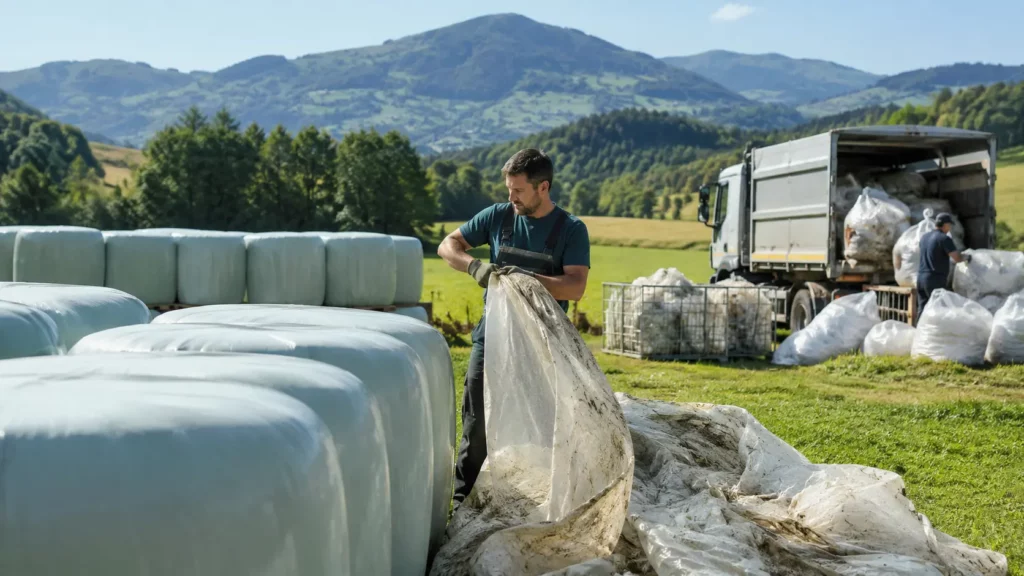
A National Collection and Recycling Scheme organises the collection, sorting and recycling of used agricultural plastics at national level. It brings together manufacturers, distributors, farmers, collectors, recyclers and public authorities within a shared framework.
Why are these schemes important for agricultural plastics?
They help improve collection and recycling rates, reduce plastic leakage into the environment and provide farmers with practical solutions for managing used agricultural plastics.
Does APE Europe support one harmonised European system?
No. APE Europe supports a common European objective while allowing each Member State to establish a system adapted to its agricultural structures, infrastructure and market conditions.
What should the Circular Economy Act include?
APE Europe recommends including a common deadline by which every Member State should ensure the existence of an operational National Collection and Recycling Scheme for agricultural plastics.
Which stakeholders are involved in these schemes?
Successful schemes require cooperation across the entire agricultural plastics value chain, including manufacturers, distributors, farmers, agricultural cooperatives, collectors, recyclers and public authorities.